Limited Early Adopters Program for high-risk industries now open Get Early Access →
EHS SYSTEM IN HEAVY ENGINEERING & MANUFACTURING INDUSTRY

Heavy Engineering & Manufacturing

Tailored for Heavy Engineering & Manufacturing Operations
Audit Management LIVE CAPA Management LIVE Compliance Management LIVE Incident Management LIVE Inspection Management LIVE Job Safety Analysis LIVE Near-Miss Reporting LIVE Non-Compliance Reporting (NCR) LIVE Risk Management LIVE Root Cause Analysis LIVE Safety Observation Reporting LIVE Change Management SOON Checklists Management SOON Document Management SOON Event Tracking SOON HAZMAT Management SOON Hot Work Permit SOON Occupational Health SOON Operational Risk (ORM) SOON Permit to Work SOON Training & Competency SOON Waste Management SOON Audit Management LIVE CAPA Management LIVE Compliance Management LIVE Incident Management LIVE Inspection Management LIVE Job Safety Analysis LIVE Near-Miss Reporting LIVE Non-Compliance Reporting (NCR) LIVE Risk Management LIVE Root Cause Analysis LIVE Safety Observation Reporting LIVE Change Management SOON Checklists Management SOON Document Management SOON Event Tracking SOON HAZMAT Management SOON Hot Work Permit SOON Occupational Health SOON Operational Risk (ORM) SOON Permit to Work SOON Training & Competency SOON Waste Management SOON
INDUSTRY OVERVIEW

Understanding the Operational Environment of Heavy Engineering & Manufacturing

Heavy engineering and manufacturing facilities operate in one of the most complex EHS environments of any industry. Workers face daily exposure to mechanical hazards, extreme temperatures, noise, chemical agents, ergonomic stressors, and high-consequence energy sources. The consequences of EHS management failures — machine amputations, molten metal incidents, crane collapses, or toxic releases — are severe, immediate, and highly visible to regulators and insurers alike.

Organizations in this sector managing EHS on spreadsheets and paper forms are not just operationally inefficient — they are genuinely exposed. A digitalized EHS system is a foundational risk control, not a productivity tool. 
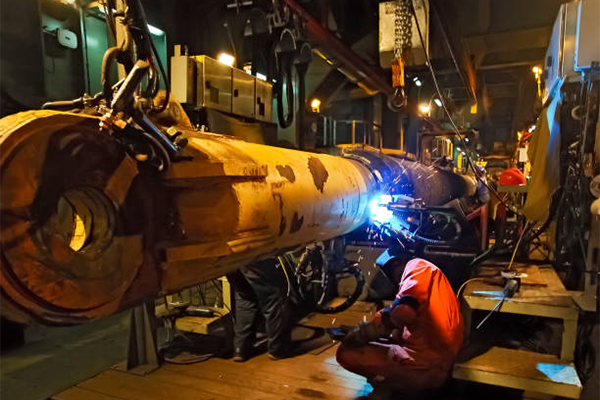
Heavy Engineering & Manufacturing
DID YOU KNOW?
The majority of repeat manufacturing incidents don't happen because a safety rule didn't exist. They happen because action items and CAPAs got buried in a spreadsheet and were never verified on the floor.
KEY TAKEAWAY
Visibility rarely becomes difficult overnight. It becomes difficult gradually. One facility. One department. One spreadsheet. One audit. One corrective action. One reporting requirement at a time. Until teams spend more time assembling information than acting on it. The problem is not Excel. The problem is maintaining visibility across connected manufacturing operations.
OPERATIONS WE SUPPORT

Built For Real-World Operations

01

Discrete Manufacturing

Supporting facilities where production, maintenance, quality, safety, and compliance activities must remain aligned to maintain operational performance and product consistency.

02

Process Manufacturing

Providing visibility across continuous operations where production, process safety, compliance, operational risk, and corrective actions are closely connected.

03

Food & Beverage Manufacturing

Supporting environments where quality standards, audits, inspections, compliance requirements, workforce safety, and operational controls must work together every day.

04

Automotive Manufacturing

Maintaining visibility across production lines, inspections, incidents, corrective actions, quality findings, workforce safety activities, and operational performance requirements.

05

Electronics Manufacturing

Supporting facilities where quality controls, process discipline, operational consistency, compliance requirements, and workforce safety require continuous oversight.

06

Industrial Manufacturing

Providing visibility across large-scale operations involving equipment, maintenance activities, contractors, audits, inspections, investigations, and corrective actions.

07

Multi-Site Manufacturing Operations

Helping organisations maintain consistency across facilities, departments, audits, CAPAs, inspections, risk assessments, and reporting activities from a unified operational view.

REGULATORY FRAMEWORKS

Standards & Regulations We Help You Comply With

OSHA 29 CFR 1910 General Industry
OSHA 1910.119 — Process Safety Management
OSHA 1910.147 — LOTO
OSHA 29 CFR 1910.95 — Occupational Noise
OSHA 300 Log (29 CFR 1904)
EPA RMP (40 CFR Part 68)
ISO 45001:2018
ISO 14001:2015
NFPA 70E — Electrical Safety
ASME / ANSI Crane & Hoist Standards
Local EPA / State Permit Conditions
Workers' Compensation Reporting
OSHA 29 CFR 1910 General Industry
OSHA 1910.119 — Process Safety Management
OSHA 1910.147 — LOTO
OSHA 29 CFR 1910.95 — Occupational Noise
OSHA 300 Log (29 CFR 1904)
EPA RMP (40 CFR Part 68)
ISO 45001:2018
ISO 14001:2015
NFPA 70E — Electrical Safety
ASME / ANSI Crane & Hoist Standards
Local EPA / State Permit Conditions
Workers' Compensation Reporting
Local EPA / State Permit Conditions
ASME / ANSI Crane & Hoist Standards
NFPA 70E — Electrical Safety
ISO 14001:2015
ISO 45001:2018
EPA RMP (40 CFR Part 68)
OSHA 300 Log (29 CFR 1904)
OSHA 29 CFR 1910.95 — Occupational Noise
OSHA 1910.147 — LOTO
OSHA 1910.119 — Process Safety Management
OSHA 29 CFR 1910 General Industry
Workers' Compensation Reporting
Local EPA / State Permit Conditions
ASME / ANSI Crane & Hoist Standards
NFPA 70E — Electrical Safety
ISO 14001:2015
ISO 45001:2018
EPA RMP (40 CFR Part 68)
OSHA 300 Log (29 CFR 1904)
OSHA 29 CFR 1910.95 — Occupational Noise
OSHA 1910.147 — LOTO
OSHA 1910.119 — Process Safety Management
OSHA 29 CFR 1910 General Industry

Ready to modernize your EHS operations?

Discover how SOAPBOX.CLOUD™ helps organizations simplify compliance, strengthen workplace safety, and digitize EHS operations with one intelligent platform.
Get in Touch →
Language