Limited Early Adopters Program for high-risk industries now open Get Early Access →
EHS SYSTEM IN FORESTRY INDUSTRY

Forestry

Tailored for Timber Harvesting, Silviculture, Sawmilling, Wood Processing, Pulp & Paper and Forest Management Operations
Audit Management LIVE CAPA Management LIVE Compliance Management LIVE Incident Management LIVE Inspection Management LIVE Job Safety Analysis LIVE Near-Miss Reporting LIVE Non-Compliance Reporting (NCR) LIVE Risk Management LIVE Root Cause Analysis LIVE Safety Observation Reporting LIVE Change Management SOON Checklists Management SOON Document Management SOON Event Tracking SOON HAZMAT Management SOON Hot Work Permit SOON Occupational Health SOON Operational Risk (ORM) SOON Permit to Work SOON Training & Competency SOON Waste Management SOON Audit Management LIVE CAPA Management LIVE Compliance Management LIVE Incident Management LIVE Inspection Management LIVE Job Safety Analysis LIVE Near-Miss Reporting LIVE Non-Compliance Reporting (NCR) LIVE Risk Management LIVE Root Cause Analysis LIVE Safety Observation Reporting LIVE Change Management SOON Checklists Management SOON Document Management SOON Event Tracking SOON HAZMAT Management SOON Hot Work Permit SOON Occupational Health SOON Operational Risk (ORM) SOON Permit to Work SOON Training & Competency SOON Waste Management SOON
INDUSTRY OVERVIEW

Understanding the Operational Environment of Forestry

Forestry is consistently among the most dangerous industries in the United States and globally. The logging sector alone records a fatality rate of approximately 80–120 deaths per 100,000 workers — more than 25 times the all-industry average and second only to fishing. The primary causes are stark and remarkably persistent: struck-by falling trees, contact with log-hauling equipment, chainsaw and cutting tool injuries, mobile equipment rollover on steep terrain, and — increasingly — wildfire entrapment during operations in fire-prone landscapes. Despite this extraordinary risk profile, many forestry operations — particularly small and mid-size timber companies, logging contractors, and forest management organisations — still manage EHS on paper log books, handwritten near-miss reports, and institutional memory carried by crew supervisors with decades of experience.

The forestry industry spans two fundamentally different operating environments that require distinct EHS approaches: the field (harvesting, silviculture, log hauling, prescribed burning — remote, variable, and dangerous) and the facility (sawmill, plywood plant, pulp mill, engineered wood products plant — fixed, industrial, and subject to comprehensive OSHA general industry standards). A large integrated forestry company may operate across both simultaneously, with the same EHS Manager responsible for a crew of chainsaw operators on a remote hillside and a sawmill running three shifts under NFPA 664 dust explosion standards. 
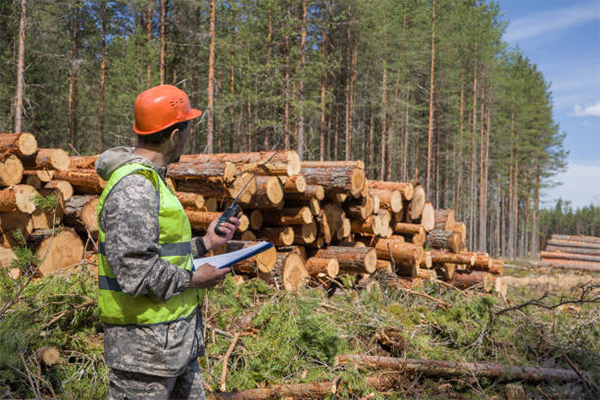
Forestry
DID YOU KNOW?
Food manufacturers must balance worker safety, product quality, hygiene, equipment maintenance, contractor activities, and regulatory compliance simultaneously, often under strict production schedules.  
KEY TAKEAWAY
Distance shouldn't create disconnected safety systems. As operations expand across forests, contractors, equipment, and environmental programmes, leaders need one connected view of operational risk instead of dozens of isolated reporting processes.
OPERATIONS WE SUPPORT

Built For Real-World Operations

01

Timber Harvesting (Logging)

Felling, bucking, limbing — chainsaw and feller-buncher; cable yarding; forwarder/skidder extraction; cut-to-length (CTL) operations; helicopter logging; clear-cut and selective harvest

02

Log Hauling & Transport

Log truck operations (B-train, articulated log truck), loader operation at landing, weighbridge compliance, haul road maintenance, chip van / pulp hauling

03

Silviculture & Reforestation

Site preparation (chemical and mechanical), planting (manual and machine-assisted), thinning (hand and mechanical), pruning, fertiliser application, herbicide and pesticide application (ground and aerial)

04

Prescribed Burning & Fire Operations

Prescribed fire application (backing fire, flanking fire), wildland fire suppression support, aerial ignition (helicopter or drone), smoke management, mop-up operations

05

Sawmilling

Log infeed, debarking, headrig sawing, edging, trimming, kiln drying, planing, green chain sorting, lumber packaging and stacking

06

Veneer, Plywood & Engineered Wood Products

Peeler block conditioning, veneer lathe, clipping, drying (veneer dryers — fire risk), gluing / pressing, sanding, oriented strand board (OSB) mat forming and pressing

07

Pulp & Paper Manufacturing

Wood chip handling, pulping (kraft / mechanical / CTMP), bleaching (Cl2, ClO2, H2O2), chemical recovery (black liquor combustion — smelt), paper machine operations, wastewater treatment

08

Forest Nursery & Seed Orchard

Seed collection (climbing, aerial), bare-root and container seedling production, irrigation, pesticide and fungicide application, manual transplanting, greenhouse operations

REGULATORY FRAMEWORKS

Standards & Regulations We Help You Comply With

OSHA 29 CFR 1910.266 — Logging Operations
OSHA 29 CFR 1910 — General Industry (Sawmill / Processing)
OSHA 29 CFR 1928 — Agriculture (some silviculture operations)
EPA FIFRA — Federal Insecticide, Fungicide, and Rodenticide Act
EPA 40 CFR Part 170 — Worker Protection Standard (WPS)
OSHA 29 CFR 1910.119 — PSM (pulp mills with covered chemicals)
NFPA 664 — Standard for the Prevention of Fires and Explosions in Wood Processing and Woodworking Facilities
NFPA 654 — Combustible Particulate Solids
OSHA 1910.1048 — Formaldehyde (engineered wood products)
OSHA 1910.95 — Occupational Noise (sawmill / processing)
FAA 14 CFR Part 137 — Agricultural Aircraft Operations (aerial silviculture)
DOT FMCSA 49 CFR (log hauling)
State Forestry Safety Regulations (OR, WA, CA, AK, ID, MT, ME, VT)
ISO 45001:2018 — OH&S Management System
OSHA 29 CFR 1910.266 — Logging Operations
OSHA 29 CFR 1910 — General Industry (Sawmill / Processing)
OSHA 29 CFR 1928 — Agriculture (some silviculture operations)
EPA FIFRA — Federal Insecticide, Fungicide, and Rodenticide Act
EPA 40 CFR Part 170 — Worker Protection Standard (WPS)
OSHA 29 CFR 1910.119 — PSM (pulp mills with covered chemicals)
NFPA 664 — Standard for the Prevention of Fires and Explosions in Wood Processing and Woodworking Facilities
NFPA 654 — Combustible Particulate Solids
OSHA 1910.1048 — Formaldehyde (engineered wood products)
OSHA 1910.95 — Occupational Noise (sawmill / processing)
FAA 14 CFR Part 137 — Agricultural Aircraft Operations (aerial silviculture)
DOT FMCSA 49 CFR (log hauling)
State Forestry Safety Regulations (OR, WA, CA, AK, ID, MT, ME, VT)
ISO 45001:2018 — OH&S Management System
State Forestry Safety Regulations (OR, WA, CA, AK, ID, MT, ME, VT)
DOT FMCSA 49 CFR (log hauling)
FAA 14 CFR Part 137 — Agricultural Aircraft Operations (aerial silviculture)
OSHA 1910.95 — Occupational Noise (sawmill / processing)
OSHA 1910.1048 — Formaldehyde (engineered wood products)
NFPA 654 — Combustible Particulate Solids
NFPA 664 — Standard for the Prevention of Fires and Explosions in Wood Processing and Woodworking Facilities
OSHA 29 CFR 1910.119 — PSM (pulp mills with covered chemicals)
EPA 40 CFR Part 170 — Worker Protection Standard (WPS)
EPA FIFRA — Federal Insecticide, Fungicide, and Rodenticide Act
OSHA 29 CFR 1928 — Agriculture (some silviculture operations)
OSHA 29 CFR 1910 — General Industry (Sawmill / Processing)
OSHA 29 CFR 1910.266 — Logging Operations
ISO 45001:2018 — OH&S Management System
State Forestry Safety Regulations (OR, WA, CA, AK, ID, MT, ME, VT)
DOT FMCSA 49 CFR (log hauling)
FAA 14 CFR Part 137 — Agricultural Aircraft Operations (aerial silviculture)
OSHA 1910.95 — Occupational Noise (sawmill / processing)
OSHA 1910.1048 — Formaldehyde (engineered wood products)
NFPA 654 — Combustible Particulate Solids
NFPA 664 — Standard for the Prevention of Fires and Explosions in Wood Processing and Woodworking Facilities
OSHA 29 CFR 1910.119 — PSM (pulp mills with covered chemicals)
EPA 40 CFR Part 170 — Worker Protection Standard (WPS)
EPA FIFRA — Federal Insecticide, Fungicide, and Rodenticide Act
OSHA 29 CFR 1928 — Agriculture (some silviculture operations)
OSHA 29 CFR 1910 — General Industry (Sawmill / Processing)
OSHA 29 CFR 1910.266 — Logging Operations

Ready to modernize your EHS operations?

Discover how SOAPBOX.CLOUD™ helps organizations simplify compliance, strengthen workplace safety, and digitize EHS operations with one intelligent platform.
Get in Touch →
Language