Limited Early Adopters Program for high-risk industries now open Get Early Access →
EHS SYSTEM IN HEALTHCARE INDUSTRY

Healthcare

Tailored for Acute Care Hospitals, Health Systems, Ambulatory Surgical Centres, Long-Term Care & Specialty Clinics
Audit Management LIVE CAPA Management LIVE Compliance Management LIVE Incident Management LIVE Inspection Management LIVE Job Safety Analysis LIVE Near-Miss Reporting LIVE Non-Compliance Reporting (NCR) LIVE Risk Management LIVE Root Cause Analysis LIVE Safety Observation Reporting LIVE Change Management SOON Checklists Management SOON Document Management SOON Event Tracking SOON HAZMAT Management SOON Hot Work Permit SOON Occupational Health SOON Operational Risk (ORM) SOON Permit to Work SOON Training & Competency SOON Waste Management SOON Audit Management LIVE CAPA Management LIVE Compliance Management LIVE Incident Management LIVE Inspection Management LIVE Job Safety Analysis LIVE Near-Miss Reporting LIVE Non-Compliance Reporting (NCR) LIVE Risk Management LIVE Root Cause Analysis LIVE Safety Observation Reporting LIVE Change Management SOON Checklists Management SOON Document Management SOON Event Tracking SOON HAZMAT Management SOON Hot Work Permit SOON Occupational Health SOON Operational Risk (ORM) SOON Permit to Work SOON Training & Competency SOON Waste Management SOON
INDUSTRY OVERVIEW

Understanding the Operational Environment of Healthcare

Healthcare and hospital operations present a paradox at the centre of EHS management: the environments and professionals dedicated to healing human beings are also among the most hazardous workplaces in the United States. Hospitals and healthcare settings consistently record higher rates of workplace injury and illness than construction, manufacturing, and mining. OSHA data shows healthcare workers suffer more than 250,000 recordable injuries annually — driven by patient handling, bloodborne pathogen exposure, workplace violence from patients and visitors, hazardous drug exposure, and the physical demands of 24/7 clinical care.

The EHS regulatory framework for healthcare is layered across multiple agencies with different enforcement mechanisms. OSHA provides the occupational safety floor (bloodborne pathogens, hazardous chemicals, PPE, slips and falls). The Joint Commission (TJC) and CMS Conditions of Participation (CoPs) add accreditation-driven safety standards that go beyond OSHA in many areas (environment of care, emergency management, life safety). State health departments and nuclear regulatory authorities add further obligations for radiation safety, infectious disease, and facility licensing. The result is that the healthcare EHS Officer must simultaneously satisfy OSHA inspectors, TJC surveyors, CMS reviewers, and state licensing authorities — often with a smaller EHS team than an equivalent-sized industrial facility.
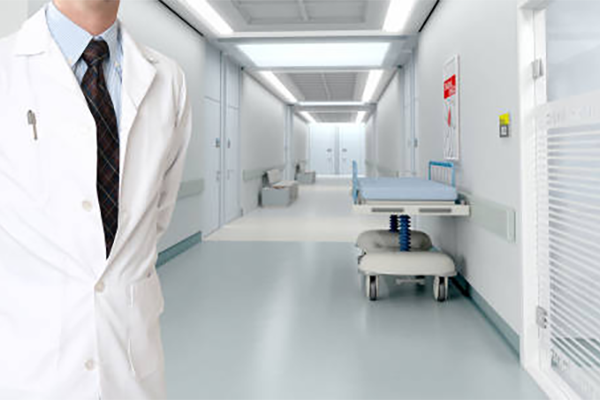
Healthcare
DID YOU KNOW?
Healthcare organisations manage far more than patient safety. Staff safety, infection prevention, hazardous substances, medical equipment, contractor work, and regulatory inspections all compete for operational attention every day. 
KEY TAKEAWAY
Healthcare environments generate enormous amounts of operational data. The challenge isn't collecting information—it's connecting it. When audits, incidents, equipment inspections, corrective actions, and compliance activities operate independently, organisational risk becomes harder to identify. 
OPERATIONS WE SUPPORT

Built For Real-World Operations

01

Acute Care Hospital

Inpatient medical/surgical care, ICU, ED, OR, labour & delivery, diagnostic imaging, pharmacy, laboratory, sterile processing

02

Health System / IDN

Multiple hospitals, clinics, ASCs, LTC facilities under single governance; centralised EHS function

03

Ambulatory Surgical Centre (ASC)

Outpatient surgical procedures; procedure rooms; sterilisation; limited recovery

04

Long-Term Care / Skilled Nursing Facility (SNF)

Residential nursing care; rehabilitation; memory care; dementia units

05

Behavioural Health

Inpatient psychiatric units, residential treatment, crisis stabilisation, outpatient counselling

06

Cancer Centre / Radiation Oncology

Radiation therapy (linear accelerators, brachytherapy), chemotherapy infusion, PET/CT, nuclear medicine

07

Outpatient Clinic / Medical Office

GP, specialist, urgent care, imaging, infusion, rehabilitation — lower-acuity outpatient setting

08

Dental / Oral Surgery

General dental, oral surgery, endodontics, orthodontics — clinic setting

REGULATORY FRAMEWORKS

Standards & Regulations We Help You Comply With

OSHA 29 CFR 1910.1030 — Bloodborne Pathogens
OSHA 29 CFR 1910.1047 — Ethylene Oxide (EtO)
OSHA 29 CFR 1910.1200 — HazCom / GHS
OSHA 29 CFR 1910.134 — Respiratory Protection
OSHA 29 CFR 1910.146 — Permit-Required Confined Spaces
OSHA 29 CFR 1910.147 — LOTO
NRC / Agreement State — Radiation Safety
Needlestick Safety and Prevention Act (NSPA)
State Health Department Regulations
ISO 45001:2018 — OH&S Management System
NFPA 101 — Life Safety Code
NFPA 99 — Health Care Facilities Code
OSHA 29 CFR 1910.1030 — Bloodborne Pathogens
OSHA 29 CFR 1910.1047 — Ethylene Oxide (EtO)
OSHA 29 CFR 1910.1200 — HazCom / GHS
OSHA 29 CFR 1910.134 — Respiratory Protection
OSHA 29 CFR 1910.146 — Permit-Required Confined Spaces
OSHA 29 CFR 1910.147 — LOTO
NRC / Agreement State — Radiation Safety
Needlestick Safety and Prevention Act (NSPA)
State Health Department Regulations
ISO 45001:2018 — OH&S Management System
NFPA 101 — Life Safety Code
NFPA 99 — Health Care Facilities Code
NFPA 101 — Life Safety Code
ISO 45001:2018 — OH&S Management System
State Health Department Regulations
Needlestick Safety and Prevention Act (NSPA)
NRC / Agreement State — Radiation Safety
OSHA 29 CFR 1910.147 — LOTO
OSHA 29 CFR 1910.146 — Permit-Required Confined Spaces
OSHA 29 CFR 1910.134 — Respiratory Protection
OSHA 29 CFR 1910.1200 — HazCom / GHS
OSHA 29 CFR 1910.1047 — Ethylene Oxide (EtO)
OSHA 29 CFR 1910.1030 — Bloodborne Pathogens
NFPA 99 — Health Care Facilities Code
NFPA 101 — Life Safety Code
ISO 45001:2018 — OH&S Management System
State Health Department Regulations
Needlestick Safety and Prevention Act (NSPA)
NRC / Agreement State — Radiation Safety
OSHA 29 CFR 1910.147 — LOTO
OSHA 29 CFR 1910.146 — Permit-Required Confined Spaces
OSHA 29 CFR 1910.134 — Respiratory Protection
OSHA 29 CFR 1910.1200 — HazCom / GHS
OSHA 29 CFR 1910.1047 — Ethylene Oxide (EtO)
OSHA 29 CFR 1910.1030 — Bloodborne Pathogens

Ready to modernize your EHS operations?

Discover how SOAPBOX.CLOUD™ helps organizations simplify compliance, strengthen workplace safety, and digitize EHS operations with one intelligent platform.
Get in Touch →
Language